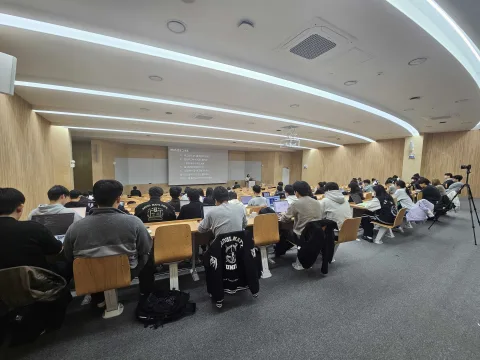
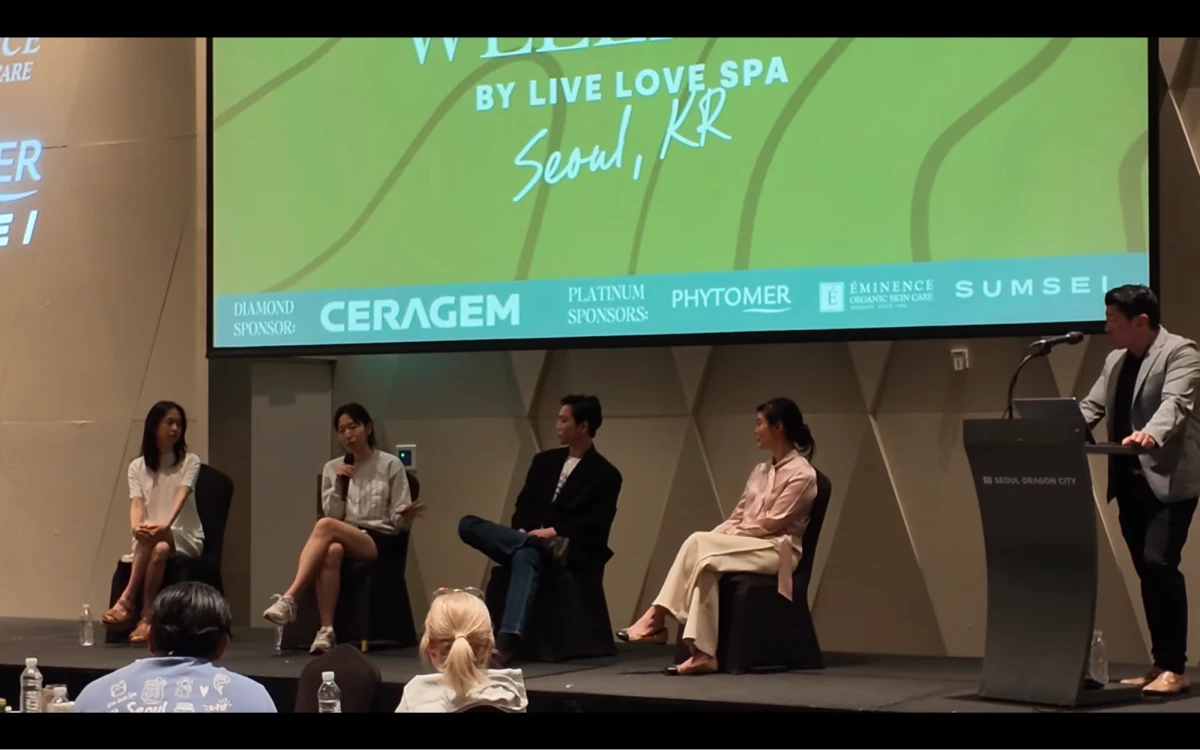
In late May, a group of U.S. beauty and wellness experts flew to Seoul for Destination Wellness 2026, an invitation-only retreat run by Live Love Spa and voted Best Industry Event by Dermascope. Around 80 leaders were in the room, including spa and brand experts from names like Four Seasons, Ritz-Carlton, Aman, Canyon Ranch, Marriott, and Hilton.
We were on the panel "The Seoul Effect: How Korea Built the World's Fastest Innovation Engine in Beauty & Wellness," sharing what we see from inside Korea's manufacturing world every day. The reason all these leaders flew in is the same reason we built Crescent Seoul here: Korea has become the place where the industry's next ideas take shape before they reach the rest of the world. In 2025 it passed the U.S. to become the world's second-largest cosmetics exporter, behind only France.
For a founder looking at Korea from outside, the useful thing isn't another checklist — it's understanding why Korea can move the way it does, because that's what decides how your own product gets made here.
Korea works like an ecosystem, not a single factory
The thread running through the whole panel was that Korea's edge isn't any one company. It's that an entire ecosystem sits close together and reinforces itself.
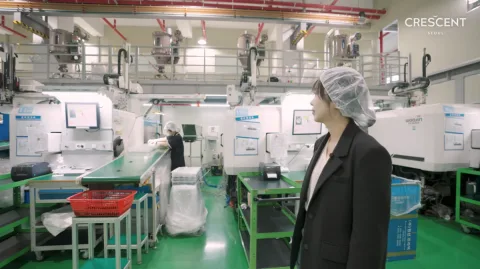
The consumer side opened up early: when Missha launched online-only at low prices back in 2000, it gave smaller brands a way to reach customers without a costly retail rollout, and pushed Korean beauty e-commerce years ahead. That demand now runs through Olive Young and a consumer base that expects something new constantly. The manufacturing side feeds that appetite: large manufacturers hold thousands of developed base formulas, so a brand can start from a proven formula rather than develop one from scratch. And the supply chain is physically clustered — formulation labs, packaging, printing, and labeling all within a short radius — so each round of sampling can come back in one to two weeks rather than months.
People compare it to Silicon Valley for a reason. The strength isn't any single company; it's the density — formulation, packaging, testing, and demand all developed in one place, feeding each other. That concentration is what lets the whole system move quickly, and it's also what's hard to navigate from the outside without knowing how the pieces connect.
How Korean innovation actually works
Korean innovation usually isn't about inventing from zero. It's about spotting potential early, refining it fast, and turning it into something millions of people can use.
BB cream is the textbook case: originally a German dermatologist's medical cream for post-procedure skin, a Korean ODM saw its everyday potential, added sun protection and brightening, and made it affordable for a far wider market. The cushion compact shows Korea creating a category outright — AmorePacific put foundation into a sponge inside a compact, global luxury brands followed, and the format now extends to blushers and powders. The common thread is the same: Korea sees where a product could go and builds it before the rest of the world catches on.
A question from the floor
One of the sharper moments came from the audience. Someone with a manufacturing background asked, in effect: with hundreds of manufacturers clustered together, how do they survive without cannibalizing each other?
The short answer is that the market is tiered. Large brands with large budgets work with the top tiers; smaller brands and smaller volumes work with the tiers below. Each tier has its own natural set of partners, so the competition plays out less head-to-head than it looks from outside, and the ecosystem produces more synergy than collision.
The part that's easy to miss is what this means for a founder. The top manufacturers run on relationships, and a new indie brand rarely gets in on its own — so the real question isn't whether Korea is open to you, but which part of the ecosystem fits your brand, and how you reach it.
Why this matters for a first-time founder
The ecosystem is remarkable, but it isn't something you can land in cold and navigate alone — the best manufacturers choose their clients, the supply chain runs across multiple partners at once, and knowing which door to knock on takes being inside the system.
The fuller picture is this: Korea has built an environment where a first-time founder can land well — because the ecosystem is mature, and because companies like ours exist to help them into it. That's the real "Seoul Effect." Not that anyone can do it alone, but that the structure, and the people who know how to navigate it, are now in place.
Where we sit
That's our whole job. We connect global indie beauty brands to the right tier of Korea's manufacturing system and coordinate the work end to end, so a founder gets access to top-tier capability without having to decode the network alone.
For the practical version of all this, two of our guides go deeper:
-
Korean Private Label Skincare Manufacturers — who actually makes what, and how to think about partners
-
Korean Cosmetics Manufacturers: The Insider Map — how the landscape is structured, tier by tier
If you're thinking about building a beauty brand in Korea and aren't sure where to start, get in touch — that's the part we handle.